
Hot Dog Food Trailer: Practical Checklist and Common Questions
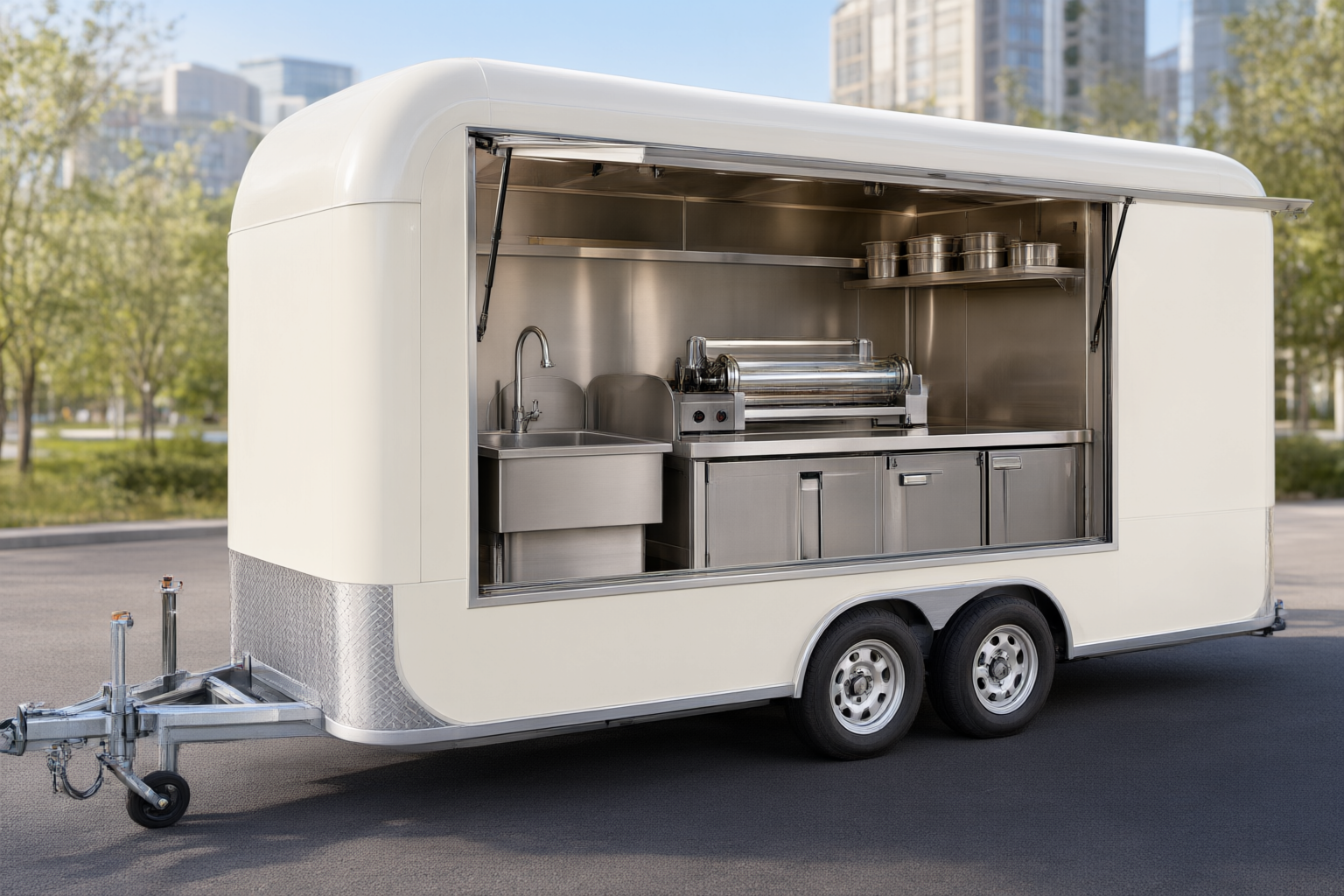
If you’re asking, “What’s the single most critical thing I must verify before launching a hot dog food trailer?” — it’s not the grill or the branding. It’s whether your trailer meets local roadworthiness and food safety fit-out standards before you serve your first customer.
In Australia — where most publicly available food trailer guidance originates — this means compliance with NHMRC Food Safety Standards and state-based vehicle registration requirements for mobile food units. While regulations vary by country, the core principle is universal: a hot dog trailer is both a vehicle and a commercial kitchen. Both systems must pass independent verification.
How to Choose a Hot Dog Food Trailer: Verified Steps & Limits
Based on verified Australian fit-out documentation (e.g., stainless steel benching, NSF-grade drainage, and certified refrigeration), here’s how to assess any trailer — regardless of origin:
- Structural integrity: Confirm the chassis is rated for continuous towing at highway speeds (not just occasional use). In Australia, trailers over 750 kg ATM require engineering certification — a requirement mirrored in many EU and North American jurisdictions for commercial mobile units.
- Food contact surfaces: All prep benches, sinks, and storage must be seamless, non-porous stainless steel (grade 304 minimum). Photos from verified Australian builds (e.g., AI-4f3cd558.png) show this as standard — not optional.
- Cooling capacity: Refrigerated units must maintain ≤5°C at all times during operation. Standalone coolers are insufficient if ambient temperatures exceed 32°C — a documented risk in Australian summer markets (AI-512180f5.png).
- Power & ventilation: Gas appliances require dedicated flue systems; electrical systems must meet local wiring rules (e.g., AS/NZS 3000 in Australia). No universal ‘plug-and-play’ solution exists.
Limitation note: Trailers built for one market rarely comply out-of-the-box elsewhere. A U.S.-spec unit may lack NHMRC-compliant drainage; an EU-built trailer may not meet Australian braking requirements. Always request third-party compliance statements — not just manufacturer claims.
Operational Checklist: What to Verify Before First Service
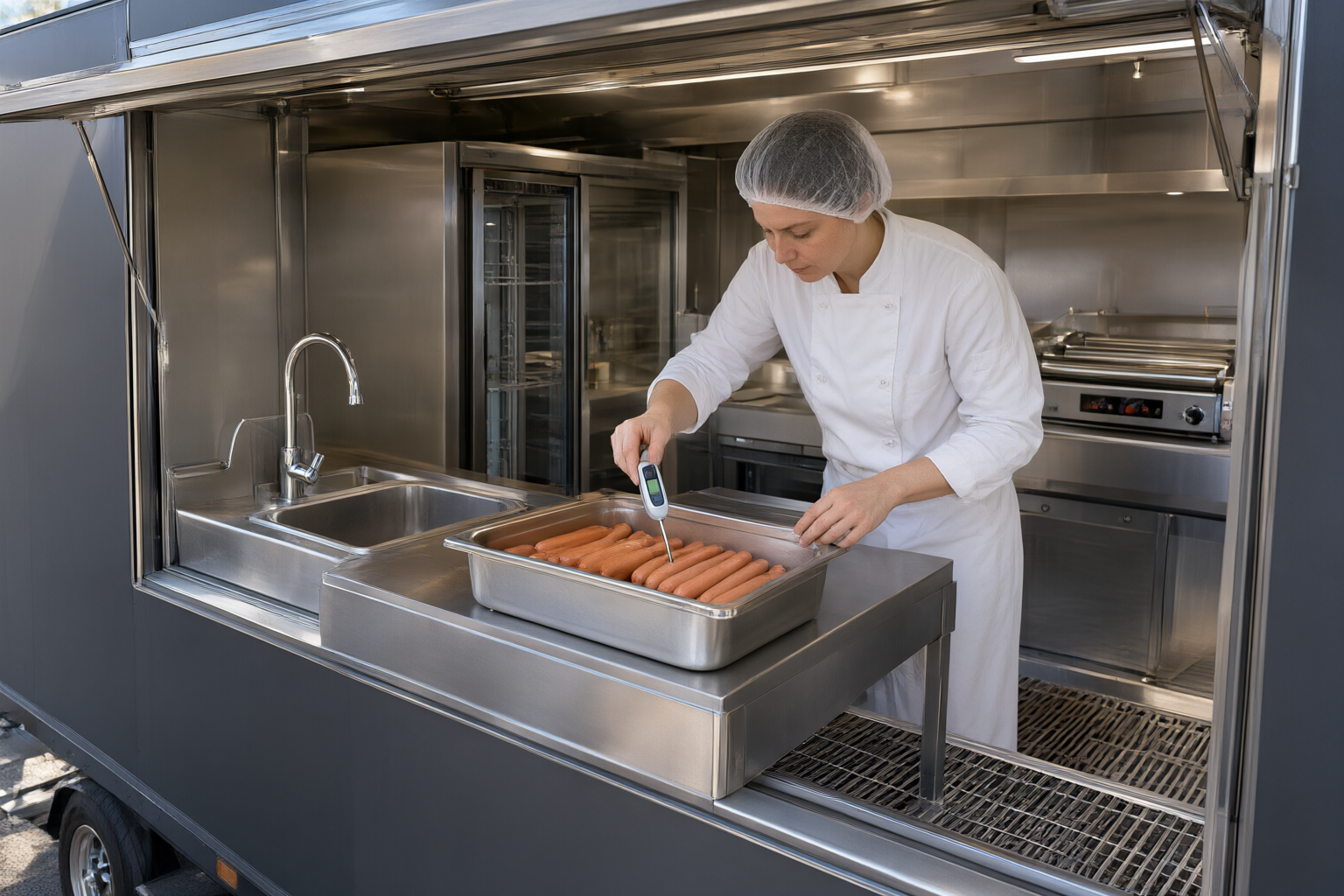
This checklist reflects verified practices from active Australian food trailer operators (AI-50548e8e.png, AI-c8ba0b18.png):
| Item | Verification Method | Why It Matters |
|---|---|---|
| Towing vehicle capacity | Check vehicle logbook (GVM/GCM) against trailer ATM weight | Overloading voids insurance and risks mechanical failure (AI-ffbd71ef.png) |
| Refrigeration performance | Record internal temp every 30 mins during 2-hr peak operation | Ensures cold chain integrity for pre-cooked sausages (AI-512180f5.png) |
| Drainage slope & material | Verify ≥2% gradient + stainless steel grating (not plastic) | Prevents bacterial pooling; required under NHMRC Standard 3.2.2 |
| Insurance coverage scope | Confirm policy explicitly names “mobile food trailer” and covers public liability + equipment breakdown | General business insurance often excludes mobile units (AI-c8ba0b18.png) |
Common Misconceptions
- “A food truck and food trailer are interchangeable.” Not operationally. Trailers require separate towing vehicles, different parking logistics, and distinct registration pathways in most countries.
- “Stainless steel = food-safe.” Only if welded, polished, and passivated. Scratched or corroded surfaces harbour bacteria — verified in Australian hygiene audits (AI-4f3cd558.png).
- “Insurance covers everything once you’re licensed.” Most policies exclude damage from improper towing, unsecured equipment, or non-compliant refrigeration — all common early-stage risks (AI-c8ba0b18.png).
Frequently Asked Questions
Do I need a food handler certificate to run a hot dog trailer?
Yes — in Australia, all staff handling ready-to-eat food must hold current Food Handler Certificate (State Health Department accredited). Equivalent requirements exist in Canada (CFIA), UK (Level 2 Award), and most EU member states.
Can I use a second-hand trailer?
You can — but only after full re-certification: structural inspection, refrigeration validation, and fit-out hygiene audit. Pre-owned units often fail on drainage slope or outdated gas fittings.
Is a generator mandatory?
No — but grid-independent power (solar + battery or LPG-powered appliances) significantly expands viable locations. Mains-only setups limit you to council-approved sites with power access.
Ready to move forward? Request a no-obligation fit-out review with our team — we cross-check your trailer plans against NHMRC, AS/NZS, and international mobile food guidelines.
