Blog Single

What Is the Most Profitable Food Trailer?

There isn’t one universal “most profitable” food trailer—profit depends on unit margin + sales volume + operating costs. That said, across top industry guides and operator breakdowns, the highest-margin trailer concepts are usually beverage- and dessert-led (coffee/espresso, mobile bar/cocktails, smoothies/juices, shaved ice, soft serve), because ingredients are cheap, service is fast, and upsells are easy.

Topics That Top-Ranking “Profitability” Guides All Share (What to Copy Into Your Plan)

From high-ranking resources, the recurring topics are:

  1. Profit math (COGS, gross margin, net margin) and why you must measure per-item profitability.
  2. High-margin menu categories (drinks, breakfast, pizza, simple handhelds) and why speed matters.
  3. Location and schedule (traffic patterns, seasonality, climate, convenience).
  4. Cost control + menu engineering (remove low-margin items, redesign menu, optimize portions).
  5. Catering/events as a profit accelerator (higher guaranteed revenue per service window).
  6. Trailer vs truck economics (trailers often lower upfront cost; towing vehicle matters).

Food Truck / Trailer Profit Calculator

“Most Profitable” Means This (Quick Definitions)

  • COGS (Cost of Goods Sold): ingredients + disposables per item
  • Gross Profit: Selling price − COGS
  • Gross Margin: Gross profit ÷ selling price
  • Net Profit: What’s left after labor, commissary/parking, fuel, insurance, permits, repairs, payment processing, marketing, taxes

Why this matters: many concepts show huge gross margins on paper, but labor/time and complexity kill net profit.

The Shortlist: Highest-Profit Food Trailer Concepts (Ranked by Margin + Simplicity)

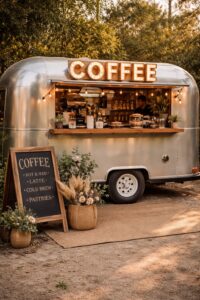
1) Coffee / Espresso Trailer (One of the best “profit + repeat customers” models)

Why it’s so profitable

  • Coffee drinks can be very low-cost to produce and commonly show ~70–85% gross margins in menu breakdowns.
  • Coffee trailers can also win on routine/loyalty (morning commuters, campuses, business parks) and catering/event packages.

Profit levers

  • Speed of service (batch iced coffee/cold brew)
  • Add-ons: extra espresso shot, flavor syrups, alternative milk, pastries
  • Corporate routes + events (predictable demand)

What makes it “trailer-friendly”

  • Compact workflow, scalable menu, lower cooking ventilation requirements (depending on setup)

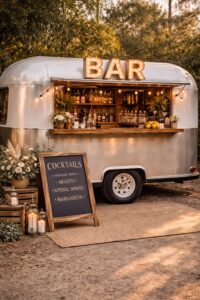
2) Mobile Bar / Cocktail Trailer (Potentially the highest per-order profit—where legal)

If your local regulations, licensing, and insurance allow it, mobile bar service can be extremely high-margin because selling prices are high relative to ingredient cost.

  • Some breakdowns show cocktail margins around ~75–90% (gross) for mobile bar menus.
  • Business-model note: “bartender-for-hire/open bar” pricing structures can produce very high margins in some cases (vs per-drink models that carry more cost).

Profit levers

  • Package pricing (per hour / per guest / minimum spend)
  • Wedding/corporate bookings (higher AOV)
  • Tight inventory + limited menu (reduce waste)

Watch-outs

  • Licensing complexity and liquor liability requirements can materially change net profit.

3) Shaved Ice Trailer (High margin, low labor, high throughput, seasonal powerhouse)

Shaved ice is repeatedly cited as a high-margin, low-cost model:

  • Guides commonly cite ~70–85% profit margin ranges for shaved ice businesses and show very low cost per serving relative to price.

Profit levers

  • High-traffic seasonal locations (parks, beaches, festivals)
  • Add-ons: condensed milk, boba, fruit, “premium” syrups
  • Event catering (schools, sports, fundraisers)

Watch-outs

  • Seasonality is real; your annual profitability depends on your climate and event calendar.

4) Soft Serve / Ice Cream Trailer (Premium margins + huge impulse demand)

Soft serve is often positioned as highly profitable when volume is strong:

  • Industry education content commonly cites ~70–80% profit margin for soft serve models.
  • Soft-serve profit calculators show high profit per serving when food cost is kept low.

Profit levers

  • Upsells: waffle cones, dips, sprinkles, stuffed cones, floats, affogato
  • Bundles: ice cream + coffee (high AOV, low added labor)

Watch-outs

  • Power demand, machine maintenance, and hot-weather throughput planning (lines = lost sales).

5) Pizza Trailer (High margin + high volume when executed well)

Pizza repeatedly appears in “most profitable menu items” lists:

  • Menu breakdown examples show very low ingredient cost relative to selling price for basic pizzas and emphasize customization and volume potential.

Profit levers

  • Limited menu (2–4 core pizzas + rotating special)
  • Slice model at events (faster throughput)
  • Prepped dough system + efficient oven workflow

Watch-outs

  • Heat management, ventilation, oven choice, and prep discipline matter a lot.

6) Breakfast / Brunch Trailer (Low COGS, fast prep, combo-friendly)

Breakfast is repeatedly highlighted as a sleeper-profit category:

  • High-margin breakfast examples emphasize cheap ingredients, fast prep, and easy bundling with coffee.

Profit levers

  • “Combo architecture” (sandwich + coffee)
  • Limited SKUs, shared ingredients
  • Morning routes near offices, industrial parks, hospitals

Quick Comparison Table: Which Food Trailer Concept Is Most Profitable for Your Situation?

ConceptWhy it winsTypical “profit killers”Best venues
Coffee / espressoHigh margins + daily repeat trafficSlow bar workflow, too many custom drinksOffice parks, campuses, commuting hubs
Mobile barVery high per-event revenue potentialLicensing/insurance complexityWeddings, corporate, private events
Shaved iceHigh margin + fast serviceSeasonality, bad locationsParks, beaches, festivals, sports
Soft serveHigh impulse buys + strong upsellsMachine downtime, power issuesFamily events, tourist areas, fairs
PizzaCheap base ingredients + big demandPrep bottlenecks, oven constraintsEvents, breweries, night markets
BreakfastLow COGS + combo salesLimited hours, location dependenceMorning-heavy foot traffic zones

The Decision Framework: Pick the Most Profitable Food Trailer in 20 Minutes

Step 1: Score each concept on 5 factors (1–5 scale)

  1. Gross margin potential (drinks/dessert usually highest)
  2. Throughput (customers served per hour)
  3. Labor simplicity (skill + staffing needs)
  4. Waste risk (spoilage, prep forecasting)
  5. Seasonality risk (climate + demand patterns)

Rule of thumb: the most profitable trailers usually score highest on throughput + simplicity—not just “margin.”

Step 2: Validate with your local reality

Top guides emphasize that profit varies heavily by:

  • Location and convenience
  • Your cost structure (commissary, fuel, labor, compliance)
  • Menu fit for on-the-go eating

Step 3: Design your menu for profit (not ego)

Use menu-engineering thinking:

  • Keep best-sellers that are high margin and fast
  • Remove items that became unprofitable as costs change
  • Treat your menu like a system you continuously tune

Profit Playbook: How the Best Food Trailers Maximize Net Profit

1) Build your “money-maker ladder”

  • Entry item (gets them in)
  • Core item (main margin driver)
  • Easy upsell (adds $1–$4 with minimal labor)
  • Bundle (raises average ticket—drinks are powerful here)

2) Engineer speed

Profit is often limited by how many transactions you can complete per hour.

  • Fewer SKUs
  • Shared ingredients
  • Batch prep where safe
  • Simple packaging

3) Use catering and pre-booked revenue

Event/catering focus is repeatedly cited as a way to improve economics (guaranteed demand, higher minimums).

Food Trailer vs Food Truck: Why Trailers Can Be More Profitable

If your market supports semi-fixed vending (venues, weekly routes, events), a trailer can improve ROI:

  • Some guides note food trailers often cost less upfront than fully equipped trucks, but towing capacity and vehicle needs must be included in your budget.

Lower capital pressure often means:

  • Less monthly payment stress
  • Faster break-even
  • More cash available for marketing, staffing, and inventory

FAQ

What food trailer has the highest profit margin?

In many breakdowns, beverage-focused models (coffee, cocktails, smoothies) and dessert models (shaved ice, soft serve) show the highest gross margins because ingredients are cheap and service can be fast.

More Read: Food Trailer Food Ideas: 30+ Profitable Menu Concepts for Your Mobile Kitchen

Is coffee really one of the most profitable food trailers?

Coffee commonly shows strong gross margins and benefits from repeat daily demand and catering opportunities.

What’s more profitable: shaved ice or ice cream?

Both can be high-margin. Shaved ice is often praised for very low per-serving cost and fast service, while soft serve wins on upsells and impulse traffic—your climate and foot traffic decide which nets more annually.

What food trailer concept is most profitable year-round?

Coffee is often among the best year-round models (hot and iced seasonal menu swaps). Pizza can also be strong year-round where late-night and events are consistent.

Do “high margin” menus always mean high net profit?

No. Net profit depends on labor, prep time, waste, repairs, insurance, permits, and location performance.

How much can a food trailer make per year?

Results vary widely. Industry profitability guides for mobile food businesses often cite broad annual revenue ranges and show that location, costs, and concept choice heavily affect outcomes.

What are the biggest factors that decide food trailer profitability?

Top guides repeatedly emphasize: cost control, location, speed/throughput, menu simplicity, seasonality, and marketing.

What’s the fastest way to increase profit without changing the concept?

Add high-margin drinks, build bundles, and remove slow/low-margin menu items—this is a common recommendation in menu profitability breakdowns.

Bottom Line

If you want the most consistently profitable path, start your shortlist with:

  1. Coffee / espresso trailer
  2. Mobile bar (if legal + insurable in your market)
  3. Shaved ice / soft serve dessert trailers
  4. Pizza (high volume + cheap base ingredients)
  5. Breakfast/brunch (low COGS + bundles)

If you want, tell me your target country/state, your climate (seasonality), and whether you prefer events or a weekly route—and I’ll turn this into a one-page business plan (menu, equipment list, trailer layout, and a simple profit model) for the single best concept for your situation.

답장을 남겨주세요

귀하의 이메일 주소는 게시되지 않습니다. 필요한 필드가 표시됩니다 *

Are You Looking for

Custom Food Trailers?

Free Contact Us Right Now