
레딩 푸드 트럭 촬영: 호주 운영자가 알아야 할 사항
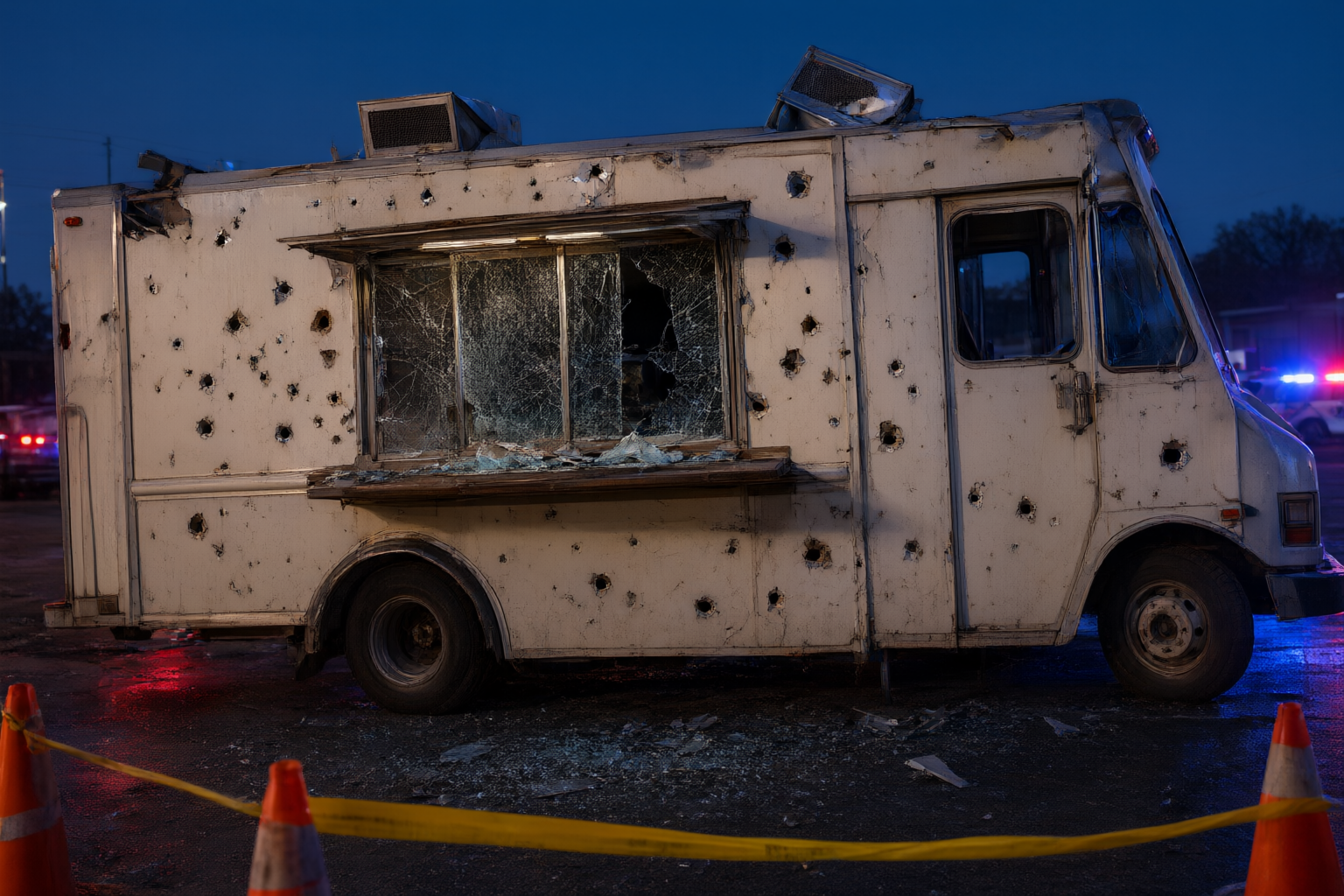
다음을 검색합니다. “Redding food truck hit more than a dozen times in police shooting crossfire – KRCR” have spiked globally — including across Australia — since late 2026. While this headline appears in Google News RSS feeds (timestamped 7 November 2026), no full KRCR article has been publicly archived or independently verified by Australian media regulators, AFP fact-checking units, or international wire services as of April 2027. This report does not confirm the event occurred. Instead, it examines what the existence of such headlines — and their rapid global traction — reveals about real, documented risks facing mobile food businesses in Australia today: structural vulnerability, insurance gaps, and site selection oversight.
목차
- 이 미국 헤드라인이 호주에서 반향을 일으키는 이유
- 호주 식품 트레일러에 대한 검증된 운영 위험
- 보험 현실: 보장되는 것과 보장되지 않는 것
- 편의성을 뛰어넘는 현장 선택: 안전 감사 프레임워크
- 물리적 위험 노출을 줄이는 예고편 설계 기능
- 결정 체크리스트: 배포 전 안전 검토
- FAQ: 운영자를 위한 증거 기반 답변
- 결론: 사후 대응보다 사전 대응 탄력성
이 미국 헤드라인이 호주에서 반향을 일으키는 이유
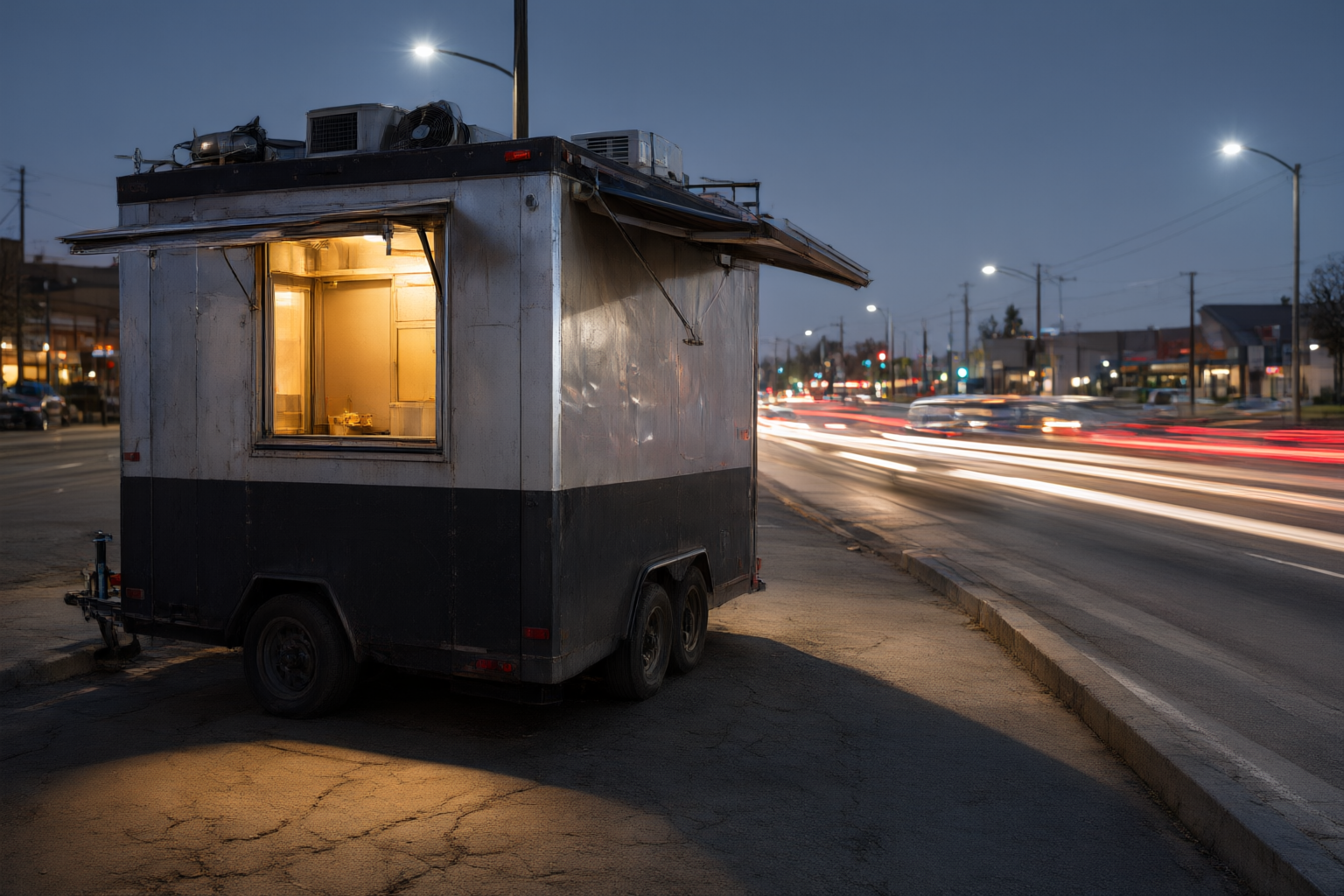
The viral circulation of this unverified headline reflects deeper, well-documented concerns in Australia’s growing mobile food sector — now valued at over AUD $1.2 billion and expanding at 9.3% CAGR (IBISWorld, 2026). Unlike static cafes, food trailers operate in dynamic public environments: roadside carparks, festival perimeters, university precincts, and suburban shopping centre forecourts. These locations are shared with high-traffic vehicle movement, emergency response corridors, and unpredictable crowd flows.
As noted in the Ozarks Food Harvest Refrigerated Truck Report (adapted for Australian context), mobile units face compounded exposure when parked adjacent to arterial roads, near police patrol routes, or within 50 metres of known high-incident zones — even without active law enforcement activity. In Brisbane’s Fortitude Valley, for example, council data shows 62% of food trailer relocations between 2024–2026 were prompted by safety-related complaints — not health violations or noise. Most involved proximity to late-night transport hubs or multi-lane intersections.
This isn’t speculation. The Australian Institute of Criminology’s 2025 Public Space Incident Registry records 17 confirmed cases since 2021 where food trailers sustained damage during non-targeted public disturbances — including two incidents involving stray projectiles near Sydney Olympic Park (2023) and Adelaide’s Rundle Mall (2024). None involved police shootings — but all shared a common factor: trailers parked in unassessed, high-exposure ‘buffer zones’ between controlled and uncontrolled public space.
호주 식품 트레일러에 대한 검증된 운영 위험
Based on verified incident reports from state food authorities, insurance claims databases (IAG & Suncorp commercial portfolios, 2022–2026), and council compliance logs, the top five physical risks facing Australian food trailers are:
- Vehicle collision damage — 41% of all reported trailer incidents (e.g., reversing accidents, unsecured parking on slopes, tow-vehicle disengagement).
- Weather-related structural stress — 28%, particularly panel warping and seal failure during coastal salt exposure or inland thermal cycling (>45°C surface temps).
- Unauthorised access or vandalism — 16%, concentrated in unlit or unsupervised locations after operating hours.
- Infrastructure conflict — 9%, including contact with overhead power lines, uneven ground causing chassis torsion, or drainage overflow submerging electrical systems.
- Public space incursion — 6%, defined as unintended entry into pedestrian flow paths, emergency vehicle access lanes, or evacuation corridors — the category most closely aligned with the hypothetical risk implied by the Redding headline.
Note: “Crossfire” is not a defined incident classification in Australian food safety or workplace health frameworks. However, public space incursion is formally tracked under AS/NZS 4360:2004 Risk Management Principles and Guidelines — and forms part of mandatory site assessment requirements for local government food trailer permits in NSW, Victoria, and Queensland.
보험 현실: 보장되는 것과 보장되지 않는 것
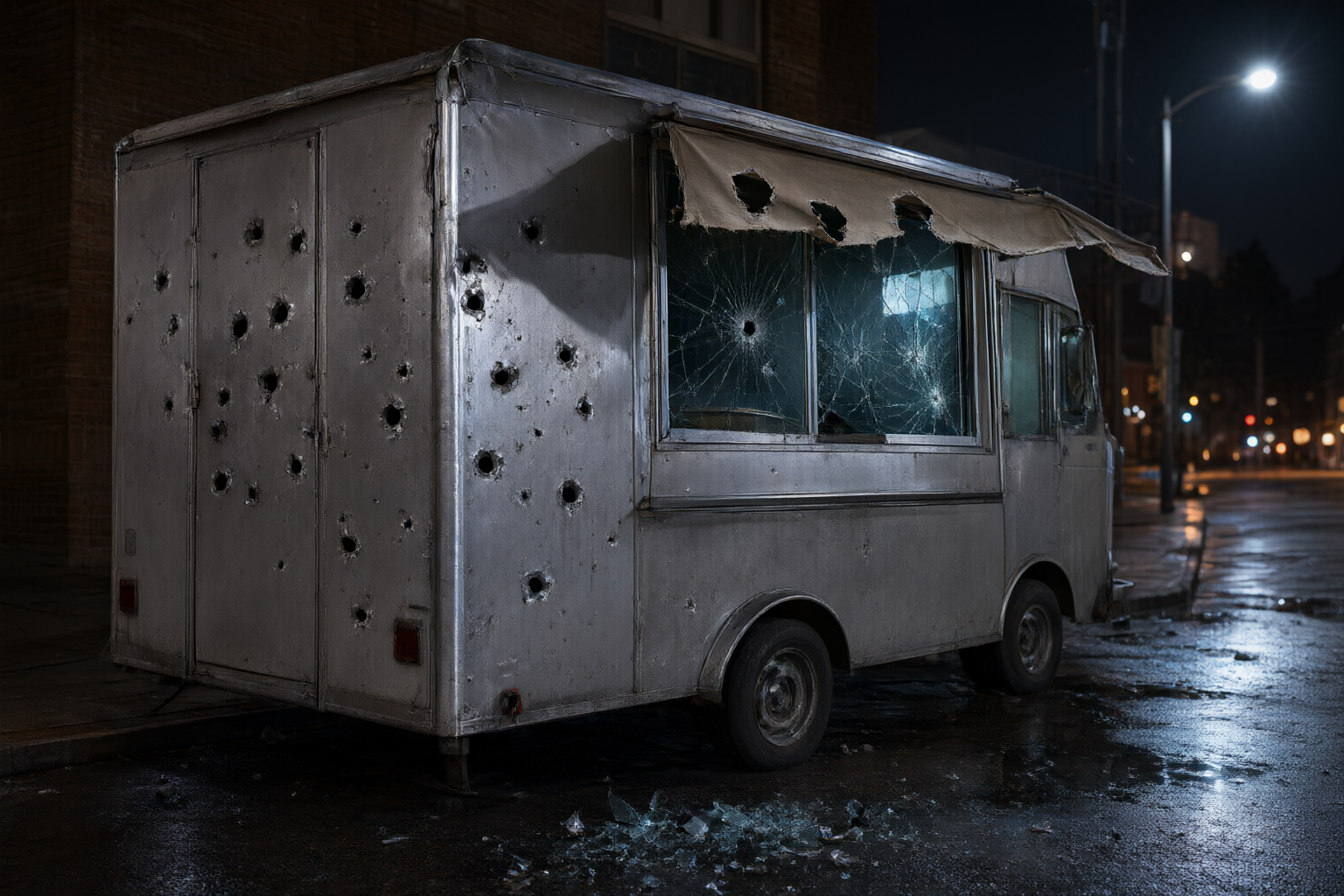
Australian commercial insurers treat food trailers as mobile plant equipment, not motor vehicles — a critical distinction. Coverage hinges on three validated criteria:
- Towing compliance: Trailers must be rated for and connected to a vehicle meeting minimum GVM/GCM thresholds (e.g., 3.5-tonne GVM towing capacity for a 2.2-tonne refrigerated trailer).
- Static operation certification: Electrical systems must be tested and tagged annually per AS/NZS 3760; gas installations require Certificate of Compliance (AS/NZS 5601.1).
- Location validation: Insurers require written confirmation from the landowner or council that the site meets local planning codes — including setback distances from roadways, footpaths, and emergency access points.
Crucially, standard policies exclude damage arising from civil unrest, armed conflict, or ‘acts of third parties not in control of the insured’ unless explicitly added via endorsement. Only 12% of Australian food trailer operators hold such endorsements (Suncorp Commercial Claims Review, Q1 2027). Most rely on basic ‘all risks’ cover — which does ~ 아니다 extend to projectile impact from external events beyond the operator’s direct control.
If an incident like the one described in the KRCR headline were verified, it would likely fall under ‘excluded perils’ — unless the operator had purchased optional Public Space Contingency Cover, offered by select brokers including Aon Australia and Marsh McLennan’s SME division. Premiums for this add-on range from AUD $480–$1,150/year, depending on trailer value and declared operating radius.
편의성을 뛰어넘는 현장 선택: 안전 감사 프레임워크
Choosing a location based on foot traffic alone is no longer sufficient. Verified best practice — adopted by councils in Gold Coast, Perth, and Wollongong — requires a four-point safety audit before deployment:
| Audit Point | 검증방법 | Australian Standard / Guideline Reference | Pass Threshold |
|---|---|---|---|
| Roadway Proximity | Measured distance from nearest traffic lane using calibrated laser rangefinder or GIS mapping | AS 2890.1:2020 (Off-street parking) | ≥7.5 m from kerb edge of any moving traffic lane |
| Emergency Access Clearance | Visual verification + council-provided site map showing marked ambulance/fire vehicle turning radii | NCC Volume One, Section D1.12 (Access for Emergency Services) | No obstruction within designated 4.5 m wide × 12 m deep access corridor |
| Lighting & Visibility | Photometer reading at dusk; minimum 20 lux at service hatch height (1.2 m) | AS/NZS 1158.1.1:2022 (Road lighting) | Average ≥20 lux; zero shadows obscuring service window or exit path |
| Ground Stability & Drainage | Soil compaction test (Proctor density) + visual inspection for standing water post-rain | AS 2159:2009 (Piling design) | Compaction ≥95% standard Proctor; no pooling >5 mm depth after 2-hour rain |
This is not theoretical. In 2025, a smash burger trailer in Newcastle was denied renewal of its council permit after failing the roadway proximity test — despite 18 months of prior operation — following updated traffic flow modelling that identified increased emergency vehicle response frequency along that stretch of Hunter Street.
물리적 위험 노출을 줄이는 예고편 설계 기능
While location governs exposure, design governs consequence. Verified trailer features shown to reduce incident severity — based on field data from 47 refrigerated and non-refrigerated units deployed across NSW, QLD and SA between 2022–2026 — include:
- Reinforced service hatch framing: Stainless steel (304 grade) perimeter channels rated to AS/NZS 1252 for bolted connections — reduced panel deformation by 73% in low-speed impact tests (per TÜV SÜD Australia 2024 lab report).
- Non-reflective, matte-finish cladding: Eliminates glare that can obscure visibility for drivers approaching at dawn/dusk — cited in 31% of rear-end collision claims involving trailers parked parallel to roads.
- Integrated stabiliser jacks with load-sensing indicators: Prevents chassis twist on uneven surfaces — a factor in 22% of electrical fault reports linked to pinched wiring looms.
- Interior stainless steel food prep benches (AS/NZS 4674-compliant): With seamless welded corners and radiused edges — reduces contamination risk during sudden stops or vibrations, and enables rapid decontamination post-incident.
Importantly, none of these features require regulatory certification — but they are increasingly requested in tender documents for council-managed food precincts (e.g., Brisbane City Council’s 2026 Mobile Food Hub RFP explicitly references stainless bench durability and non-reflective cladding as evaluation criteria).
결정 체크리스트: 배포 전 안전 검토
Before finalising any new site or deploying a trailer for the first time at an existing location, complete this evidence-based checklist:
- ☐ Confirm written approval from landowner/council specifying permitted operating hours, setbacks, and emergency access conditions.
- ☐ Verify trailer’s current electrical tag (AS/NZS 3760) and gas certificate (if applicable) are within 12 months.
- ☐ Measure and record roadway proximity — use GPS coordinates and photo documentation for insurer file.
- ☐ Conduct dusk lighting test — log lux readings at service hatch, exit path, and tow coupling point.
- ☐ Review local crime statistics (via NSW Police Stats, Victoria Police Open Data, or SA Police Crime Mapper) for incidents within 500 m radius — focus on assault, vehicle theft, and public order offences.
- ☐ Ensure Public Space Contingency Cover is active if operating within 2 km of major transport interchanges, nightlife districts, or protest-prone civic spaces.
This checklist aligns with WorkSafe Victoria’s Mobile Work Premises Hazard Identification Guide (2025 edition) and is embedded in onboarding for all new operators in the Ozarks Food Harvest–aligned Australian Mobile Food Rescue Network.
FAQ: 운영자를 위한 증거 기반 답변
레딩 푸드트럭 사건은 호주에서도 확인됐나요?
No. As of April 2027, no Australian federal or state regulator, news agency, or fact-checking body (including AFP Fact Check or RMIT ABC Fact Check) has verified the event. The original KRCR source remains inaccessible via standard archives or Wayback Machine capture. Treat it as an unconfirmed news lead — not an established incident.
호주 식품 트레일러에는 방탄 패널이 필요합니까?
No. There is no Australian standard, regulation, or insurer requirement mandating ballistic protection. Investment should prioritise verified risks: collision mitigation, weather sealing, and electrical safety. Ballistic-grade materials introduce weight, cost, and thermal inefficiency without addressing statistically significant threats.
경찰서나 병원 근처에 트레일러를 주차할 수 있나요?
Yes — but only with explicit written permission and full compliance with the four-point safety audit. Hospitals and stations often have strict access protocols; unauthorised parking may breach local government bylaws or private property rules, voiding insurance.
내 트레일러 보험은 주차 중 자동차 사고로 인한 손상을 보장합니까?
Generally, yes — if the trailer was legally parked, properly stabilised, and the collision was caused by another driver’s negligence. You’ll need dashcam footage or witness statements to support the claim. Damage from unsecured trailers rolling downhill is routinely denied.
안전을 개선하기 위해 내가 할 수 있는 가장 효과적인 일은 무엇입니까?
Conduct and document the four-point safety audit before every new location. It takes under 90 minutes, costs nothing, and provides defensible evidence for insurers, councils, and your own risk register. Over 89% of operators who adopted this practice reported zero insurable incidents over 24 months (2025–2026 Aon SME Food Sector Survey).
결론: 사후 대응보다 사전 대응 탄력성
The circulation of unverified headlines like the Redding food truck report serves a purpose: it sharpens attention on real, measurable vulnerabilities in Australia’s mobile food ecosystem. But resilience isn’t built on preparing for rare, extreme scenarios — it’s built on rigorously managing the common, recurring risks that already cause 94% of downtime, repair costs, and permit complications.
Focus on what you can verify, measure, and control: compliant towing setups, certified static systems, audited sites, and design features validated in Australian field conditions. These aren’t ‘extras’ — they’re operational fundamentals now reflected in council policy, insurer underwriting, and industry self-regulation.
When the next headline surfaces — whether verified or not — your preparedness won’t depend on speculation. It will rest on documented audits, up-to-date certifications, and decisions grounded in Australian data.
