
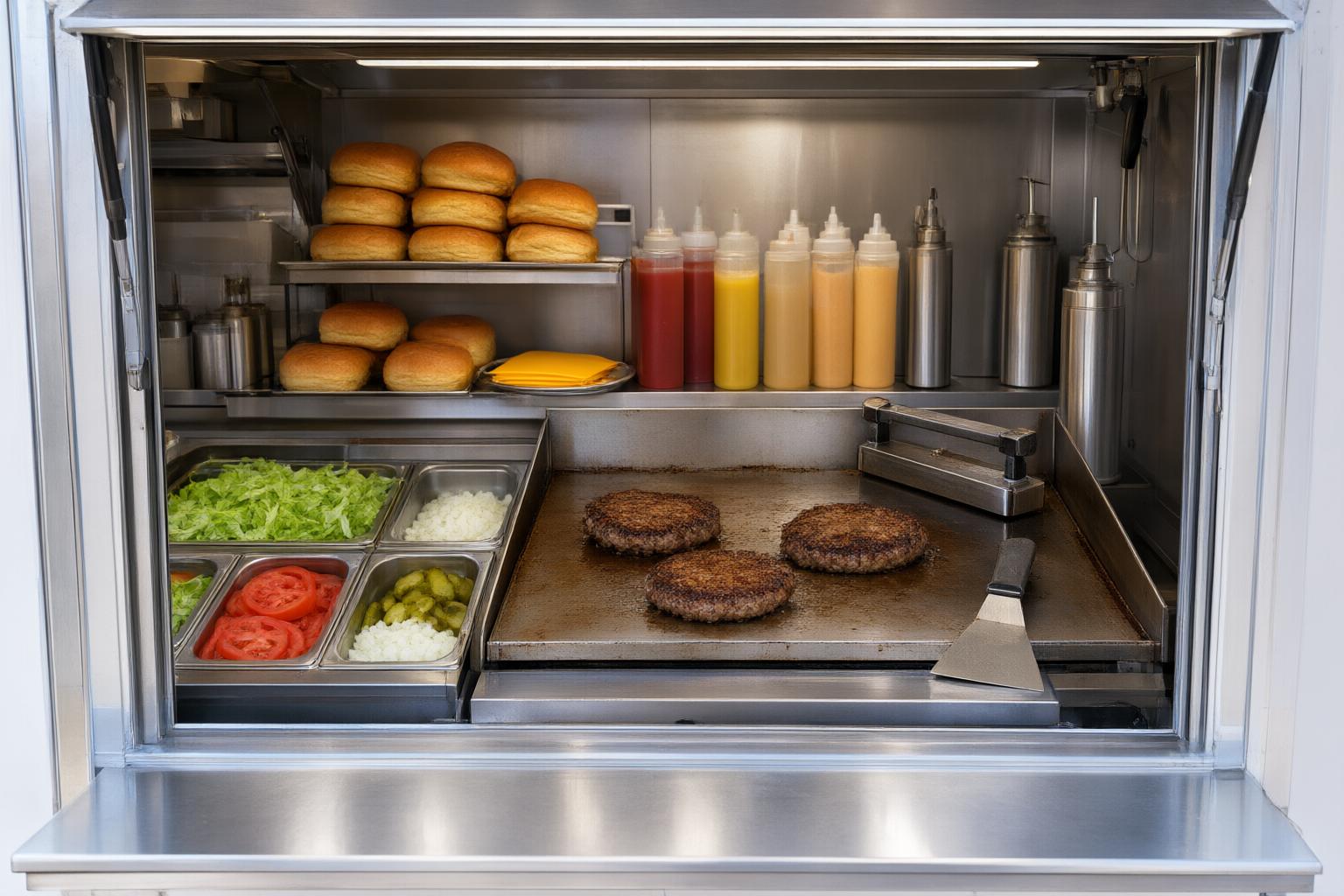
オーストラリアのオペレーター向けスマッシュバーガーフードトレーラーガイド
Smash burgers — characterised by thin, crispy-edged patties formed by pressing seasoned beef onto a scorching hot griddle — have surged in popularity across Australia’s street food scene. Their speed, visual appeal and customisability make them ideal for mobile food service. For entrepreneurs, food trailers offer lower startup costs and greater flexibility than brick-and-mortar venues. Yet launching a successful smash burger trailer in Australia demands more than great recipes: it requires understanding local regulations, equipment suitability, operational logistics and market realities. This guide outlines key considerations for Australian operators — from concept development to daily service — with emphasis on practicality, compliance and sustainability.
スマッシュバーガーがオーストラリアのモバイルフード事情に適している理由
スマッシュバーガーのフォーマットは、オーストラリアの消費者の好みや運営上の制約によく適合しています。短い調理時間 (パティあたり 90 秒未満) は、フェスティバル、市場、企業のランチゾーン、大学のキャンパスで不可欠な、ピーク時の大量のサービスをサポートします。最小限の原材料リスト (牛肉、塩、バター、バンズ、チーズ、トッピング) により、在庫管理が簡素化され、特に変わりやすい気候条件において腐敗のリスクが軽減されます。ジュージュー音を立てたり、押したり、ひっくり返したりする視覚的にダイナミックな料理は、混雑した公共スペースでも注目を集め、多額のマーケティング費用をかけずに自然な客足をサポートします。
Australian diners increasingly value transparency, freshness and local sourcing. Smash burgers lend themselves to storytelling: highlighting grass-fed Angus beef from regional suppliers, house-made pickles using seasonal produce, or brioche buns baked daily by a nearby artisanal bakery. This authenticity resonates strongly in metro and regional communities alike.
Key Operational Requirements in Australia
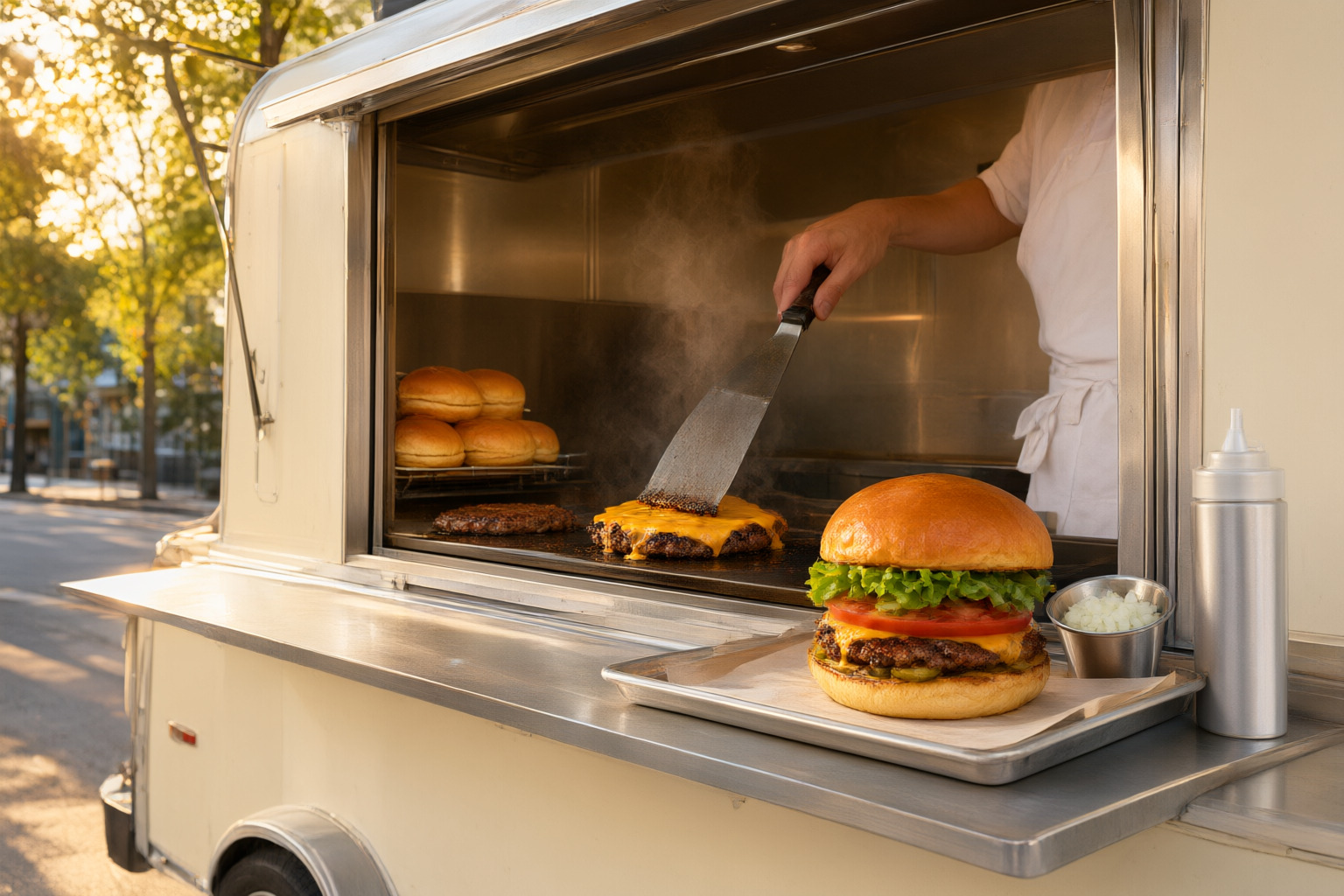
Before purchasing equipment or designing a trailer layout, operators must verify requirements with relevant local authorities. Food business regulation in Australia is shared between federal, state/territory and local government bodies. There is no single national food trailer licence — compliance is jurisdiction-specific.
Food Safety and Licensing
All food businesses must comply with the Australia New Zealand Food Standards Code, administered by Food Standards Australia New Zealand (FSANZ). Operators must register or license their business with their local council — typically under a ‘mobile food vendor’ or ‘temporary food premises’ classification. Requirements vary: some councils require pre-approval of trailer design and workflow; others mandate specific handwashing station specifications, grease trap capacity or waste water containment systems.
市議会はまた、特に早朝または深夜のサービスについて、場所、営業時間、学校や病院への近さ、騒音レベルについて制限を課す場合もあります。オペレーターは、選択したトレーラー モデルが地域の配管、電気および構造の基準 (配線については AS/NZS 3000、ガス設備については AS 4391 など) を満たしているかどうかを確認する必要があります。
事業登録と課税
事業者は、ASIC に商号を登録し、ABN を取得し、GST 登録が必要かどうかを判断する必要があります (年間売上高が 75,000 ドルを超える場合は必須)。他の中小企業と同様に、所得税、PAYG 源泉徴収 (従業員を雇用している場合)、および退職年金の義務が適用されます。食品安全ログ、サプライヤーの請求書、機器のメンテナンスの記録管理はベストプラクティスであるだけでなく、議会の条件で義務付けられることもよくあります。
トレーラーのデザインとレイアウトの基礎
効率的なスマッシュバーガートレーラーは、美しさだけよりもワークフロー、安全性、法規制順守を優先します。標準的な「組立ライン」レイアウト(受け取り→準備→調理→組み立て→配膳→洗浄)は、相互汚染を防ぐために一方向である必要があります。空間に関する重要な考慮事項は次のとおりです。
- 調理ゾーン: オペレーターの移動と換気のために、グリドルの周囲に少なくとも 600 mm のスペースを確保してください。商用グレードのフラットトップグリドル (最小 750 × 450 mm の表面) が不可欠です。ユニットが小さいと、一貫性とスループットが損なわれます。
- 冷凍: Separate fridges for raw meat (≤3°C), ready-to-eat items (≤5°C) and dairy/cheese. Under-bench models are common but must meet energy efficiency and condensation control standards applicable in Australian climates.
- Handwashing: A dedicated, temperature-controlled sink with soap, single-use towels and wastewater containment — not shared with dishwashing or prep sinks.
- Ventilation: Mechanical extraction (hood and ducting) rated for grease-laden vapour is usually required by councils. Ductless filtration systems are rarely accepted for high-heat griddle use.
Essential Equipment for Smash Burger Service
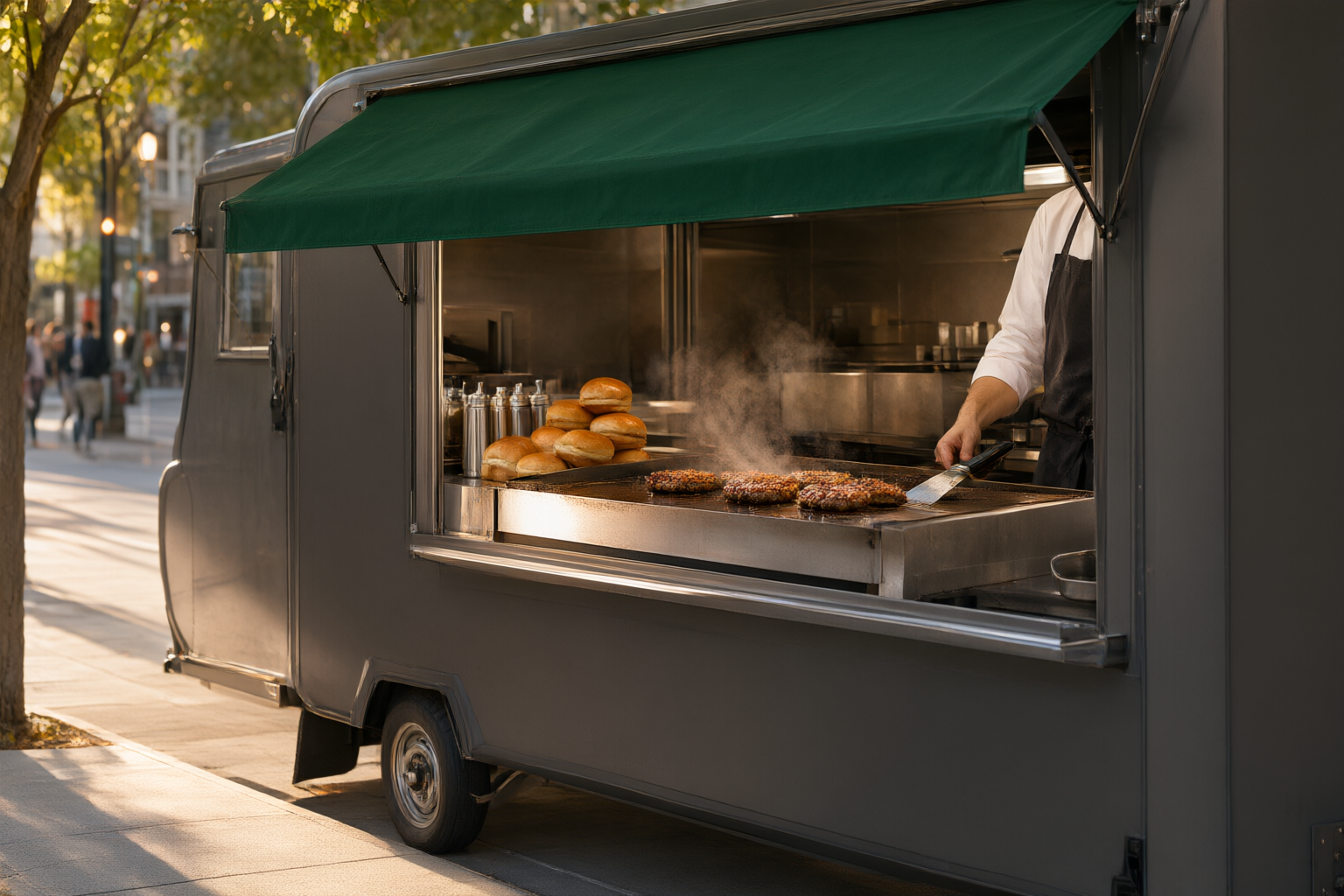
信頼性が高く、適切なサイズの機器は、食品の安全性、一貫性、労働効率に直接影響を与えます。カフェスタイルのセットアップとは異なり、スマッシュバーガーの運営には、連続使用サイクル向けに設計された堅牢な高 BTU アプライアンスが必要です。
グリドル仕様
業務用のフラットトップグリドルが操作の中心です。オーストラリアで使用するための主な機能は次のとおりです。
- 瞬時の熱制御と停電時の信頼性を考慮すると、ガス式ユニット (LPG または天然ガス) が好まれますが、安定した 32A+ 供給が保証されている場合は電気モデルも実行可能です。
- 全負荷にわたって一貫した 230 ~ 260°C の表面温度を実現する最小 24 kW の出力。
- ステンレス鋼構造 (304 グレード) により、特に沿岸地域や湿気の多い地域での耐食性を実現します。
- Adjustable thermostatic controls — critical for adapting to ambient temperature fluctuations (e.g., cooler mornings vs. hot afternoons).
Support Equipment
Complementary items include:
- Heavy-duty stainless steel smash tools (spatulas, scrapers) resistant to warping at high heat.
- Dedicated meat portioning scale (±1 g accuracy) for consistent 80–100 g patties.
- Commercial bun toaster or griddle-side toast plate — avoids soggy buns and adds texture contrast.
- Chilled prep tables with integrated storage — maintains cold chain integrity during service.
- On-board potable water tank (minimum 60 L) and greywater holding tank (AS 1546.1 compliant), sized to council requirements.
Equipment Comparison: Griddle Options for Australian Trailers
| 特徴 | Gas Flat-Top Griddle | Electric Flat-Top Griddle | Hybrid (Gas + Electric) |
|---|---|---|---|
| Heat-up time | Under 5 minutes | 8–12 minutes | Gas side: under 5 min; electric side: 8–12 min |
| Temperature stability (full load) | Excellent — recovers quickly | Good — depends on voltage stability and phase balance | Excellent on gas; good on electric |
| Fuel infrastructure | LPG cylinder or natural gas connection required | Requires dedicated 32A+ circuit (single or three-phase) | Both gas and electrical connections needed |
| Suitability for remote locations | High — LPG widely available | Low — dependent on reliable grid supply | Moderate — flexible but complex installation |
| Maintenance complexity | Moderate — gas lines, burners, regulators | Low — fewer moving parts | High — dual-system expertise required |
Buying Checklist for Australian Smash Burger Trailers
Use this checklist before committing to a trailer purchase or custom build. Confirm each point with your chosen manufacturer, installer and local council:
- ✅ Trailer chassis complies with オーストラリアのデザインルール (ADR) for vehicle modifications and weight distribution.
- ✅ All gas fittings certified to AS 4657; electrical work performed by a licensed electrician to AS/NZS 3000。
- ✅ Refrigeration units rated for Australian ambient temperatures (up to 45°C) and meet AS/NZS 4472 standards.
- ✅ Ventilation system independently assessed and approved by council — includes grease capture efficiency rating.
- ✅ Potable water system uses food-grade hoses and materials compliant with AS/NZS 4020。
- ✅ Flooring is non-slip, seamless, chemical-resistant and sloped to drainage points meeting council specifications.
- ✅ Fire suppression system (if required by council or venue) installed and certified to AS 1851。
- ✅ Trailer signage complies with local council advertising and size restrictions — includes mandatory food business registration number.
- ✅ Insurance covers public liability, product liability, equipment breakdown and transit (not just static operation).
- ✅ Supplier provides full documentation: manuals, compliance certificates, maintenance schedules and spare parts availability in Australia.
Common Challenges and Mitigation Strategies
New operators often underestimate logistical friction. Proactive planning helps avoid delays:
- Permitting delays: Initiate council engagement before finalising trailer design. Submit scaled drawings, equipment specs and workflow plans early — allow 8–12 weeks for approval in major metro areas.
- Power limitations at venues: Confirm available supply (voltage, amperage, phase) before booking events. Consider portable generators (with appropriate noise and emissions certification) as backup — but verify venue acceptance first.
- Supply chain volatility: Establish relationships with at least two local beef suppliers and two bun providers. Agree on minimum order quantities, delivery windows and temperature-handling protocols in writing.
- Staff training consistency: Document standard operating procedures (SOPs) for smash technique, cheese melt timing, bun toasting and allergen handling. Require signed acknowledgement from all team members.
よくある質問
Do I need a food handler certificate in Australia?
While not federally mandated, most councils require at least one certified food safety supervisor (FSS) on-site during operation. Certification must be from a Registered Training Organisation (RTO) delivering nationally recognised units such as HLTFSE007 (Oversee the day-to-day implementation of food safety procedures). Check with your local council — some require the FSS to be present at all times; others accept remote oversight with documented procedures.
Can I use home-kitchen-prepped ingredients?
いいえ、販売用に調理されたすべての食品は、市議会が承認した食品施設で製造されなければなりません。家庭用キッチンは、たとえ国内グレードの機器を使用していても、商業的な食品安全基準を満たしておらず、規模に関係なく製造が許可されていません。例外は非常にまれで、地方自治体からの明示的な書面による承認が必要ですが、生肉の取り扱いなどの高リスク品目については許可されることはほとんどありません。
必須の保険は何ですか?
Public liability insurance (minimum $10 million) is mandatory in most jurisdictions. Product liability, equipment breakdown, motor vehicle (for trailer towing), and workers’ compensation (if employing staff) are strongly recommended. Some event organisers and landowners require proof of insurance before granting access. Verify policy exclusions — many standard policies exclude mobile food operations unless explicitly endorsed.
How do I handle waste oil and grease disposal?
Used cooking oil and grease must be collected in sealed, labelled containers and disposed of via a licensed waste contractor. Councils prohibit pouring grease into stormwater drains or regular bins. Retain disposal dockets for audit purposes. Some states require grease trap servicing records to be submitted quarterly.
Are there grants or support programs for food trailer businesses?
State and territory governments occasionally offer small business grants, particularly for regional development, Indigenous entrepreneurship or sustainability initiatives. These are project-specific and highly competitive. No national grant program exists exclusively for food trailers. Consult your state’s Department of Jobs, Skills, Industry and Regions (or equivalent) and local council economic development unit for current opportunities — but do not rely on funding approval when budgeting.
Final Considerations
A smash burger food trailer offers a compelling entry point into Australia’s vibrant food economy — but success rests on rigorous preparation, not just culinary flair. Prioritise compliance, invest in durable, fit-for-purpose equipment, and engage early with local authorities. Document every process, train every team member, and maintain meticulous records. The most profitable trailers aren’t those with the flashiest branding — they’re the ones that operate safely, consistently and sustainably, day after day, across diverse Australian settings — from Hobart’s waterfront markets to Perth’s suburban business parks.
Regulatory requirements evolve. Always verify current obligations with your local council, state health department and the Australian Competition and Consumer Commission (ACCC) regarding labelling, pricing and consumer guarantees. This guide provides a framework — not legal advice. Engage qualified professionals (food safety consultants, accountants, lawyers) familiar with mobile food operations in your jurisdiction before commencing trade.
